Debt Solution
What Is the Maximum Credit Card Interest Rate Allowed by BSP in the Philippines?
If you carry a balance on your credit card, the interest can pile up fast, so it helps to know the legal limit. The short answer: the maximum credit card interest rate allowed by the Bangko Sentral ng Pilipinas (BSP) is 3 percent per month, or 36 percent per year, on your unpaid balance.
This guide explains that cap, the related limits, and what it means for you. Simple language, made for regular working people.
💡 Highlights
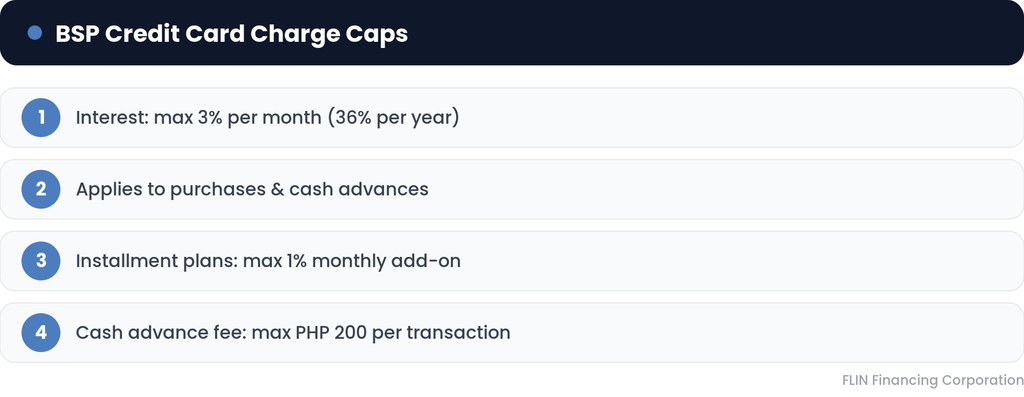
- The maximum credit card interest rate is 3 percent per month, or 36 percent per year, on unpaid balances.
- This cap applies to both retail purchases and cash advances.
- Credit card installment loans have a separate cap of 1 percent monthly add-on rate.
- Cash advance processing fees are capped at 200 pesos per transaction.
- The cap is set under BSP Circular No. 1165, issued in 2023.
- BSP reviews the cap every 6 months, so it can change.
- Even at the capped rate, a carried balance grows quickly, so paying in full is always cheapest.
What Is the Maximum Credit Card Interest Rate?
The maximum interest rate, also called the finance charge, that a bank can charge on your unpaid outstanding credit card balance is 3 percent per month, which works out to 36 percent per year. As BSP Circular No. 1165 sets out, card issuers cannot charge more than this annual rate of 36 percent on credit card transactions.
This limit applies to your regular purchases (straight payments) and to cash advances. So no matter which bank issued your card, it cannot legally charge you more than 3 percent per month on the balance you carry over.
Are There Other Credit Card Charge Limits?
Yes, two more worth knowing. As the BSP circular specifies:
- Installment loans. Credit card installment plans, including balance transfers and balance conversions, have a separate cap. Banks can charge a monthly add-on rate of no more than 1 percent.
- Cash advance fees. For a cash advance, the only extra charge allowed beyond interest is a processing fee, capped at 200 pesos per transaction. No other fees may be added.
What Law Sets the Credit Card Interest Cap?
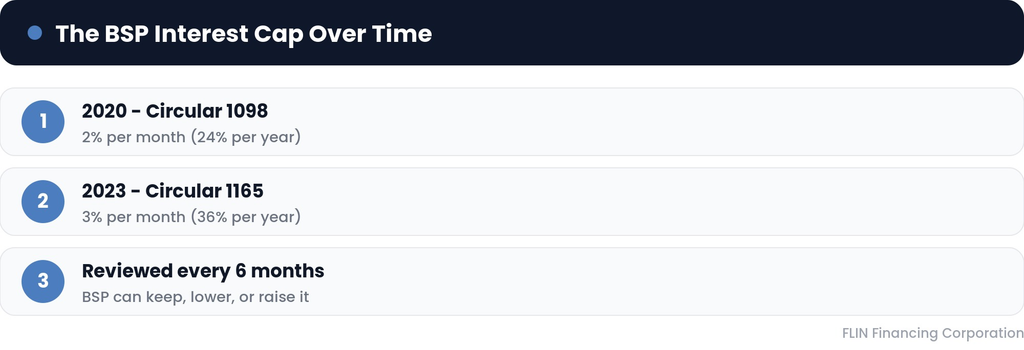
The current cap comes from BSP Circular No. 1165, issued in 2023. As reported by BusinessWorld, this set the maximum interest on unpaid card balances at 3 percent per month or 36 percent a year.
This was actually a change from the earlier cap. During the pandemic, under BSP Circular No. 1098 (2020), the limit was lower at 2 percent per month, or 24 percent a year. It was later raised to the current 3 percent.
Can the Cap Change?
Yes, so do not treat it as permanent. The BSP reviews the ceiling on credit card interest rates and fees every 6 months, and it can keep, lower, or raise it depending on economic conditions. In fact, as the Inquirer reported, the credit card industry has renewed calls to scrap the caps entirely. So it is worth checking the current figure on the BSP website if you need the exact up-to-date rate.
What Does This Mean for You as a Cardholder?
The cap protects you from runaway interest, but 3 percent per month is still expensive. Over a year, a carried balance at 36 percent can grow a lot, because the interest compounds on whatever you do not pay. So the cap is a ceiling, not a cheap rate.
The practical takeaway is simple. If you can pay your full statement balance by the due date, you are charged no interest at all, which is always the cheapest option. If you can only pay part, the interest kicks in at up to 3 percent per month on the rest, so aim to pay down the balance as fast as you can.
One note: this article is general information, not legal or financial advice. For your specific situation, it helps to speak with a financial professional.
When Credit Card Interest Has Already Piled Up
Even at the legal cap, credit card interest can grow beyond what you can comfortably pay, especially if you are carrying balances on more than one card. If the interest has already outpaced what your salary can cover, the answer is not to keep paying only the minimum and watching it climb.
This is where FLIN PH can help. FLIN helps salaried Filipinos combine high-interest debts, credit cards, online loans, and buy-now-pay-later balances, into one more manageable monthly payment, working to negotiate with your lenders and paying funds directly to your creditors so they only settle debts you already have. Rolling a high-interest card into one lower, fixed payment is one of the most direct ways to stop interest from piling up. A short, no-pressure consultation with FLIN PH is enough to see what fits your situation. The BSP cap keeps your rate from going higher than 36 percent a year, and with the right plan, you can bring what you owe back under control.
Your Debt-Free Life Start Here
Consult with us and get the best solution based on your financial condition
SEC Registered
SEC Registration number : 2026040247321-01