Debt Solution
Outstanding Debt Meaning, What It Is and How to Clear It

Outstanding debt is simply the amount of money you still owe and have not yet paid back. If you borrowed 50,000 pesos and have paid off 20,000 pesos, your outstanding debt might be higher, since you also need to pay for other fee. It is the balance that is still open, including any interest and charges added on.
This guide explains what outstanding debt means and how to deal with it. Simple language, made for regular working people.
💡 Highlights
- Outstanding debt is the amount you still owe on a loan or credit, not yet paid.
- It includes the remaining principal plus any unpaid interest, fees, and penalties.
- You will see it in your statement as the “outstanding balance.”
- The faster you clear it, you won’t get late fee and penalty fee.
- For multiple outstanding debts, combining them into one payment can make them easier to clear.
What Is Outstanding Debt?
Outstanding debt is the total amount you still owe to a lender at a given moment. The word “outstanding” just means unpaid or still due. So your outstanding debt is whatever part of what you borrowed has not been paid off yet.
It is not only the original amount you borrowed. Outstanding debt usually includes the remaining principal (the borrowed money you have not repaid), plus any interest that has built up, and any fees or penalties added to the account. That is why your outstanding balance can sometimes be higher than you expect.
What Is an Example of Outstanding Debt?
Here is a simple example. Say you took a personal loan of 100,000 pesos. Over several months, you have paid back 40,000 pesos toward the principal. Your outstanding debt on the loan is the 60,000 pesos you still owe, plus any interest and charges that have accrued.
The same idea applies to a credit card. If your card shows an outstanding balance of 15,000 pesos, that is the amount you still owe the bank, and it will be charged interest if you do not pay it in full.
Where Do You See Your Outstanding Debt?
You will usually find it on your statement, labeled as the “outstanding balance” or “total amount due.” For a credit card, it is the full amount you owe as of the statement date. For a loan, your lender can give you a statement of account showing your remaining balance.
It is a good habit to check your outstanding balance regularly, so you always know exactly how much you still owe and can plan to pay it down.
Why Does Outstanding Debt Keep Growing?
This is the part that catches people. If you do not pay your outstanding debt in full, the lender charges interest on what is left. So the balance can grow even while you are making payments, especially on high-interest debt like credit cards and online loans, where credit card interest can run up to 3 percent per month under BSP rules.
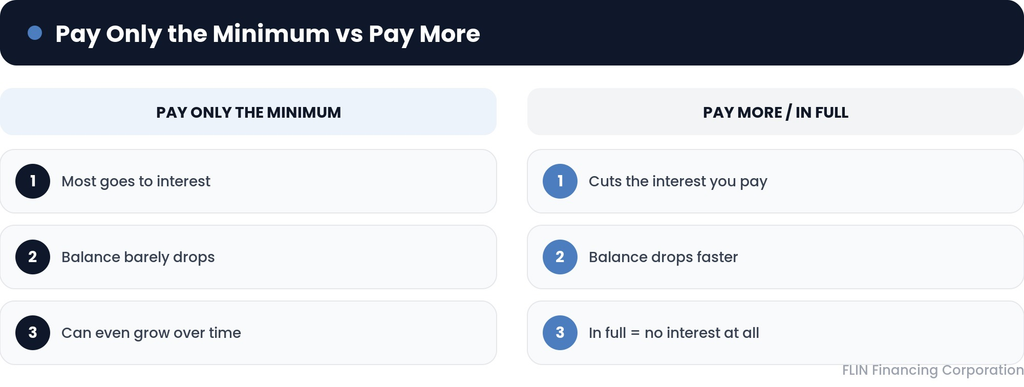
This is clearest with a credit card. If you only pay the minimum, most of your payment goes to interest, and the outstanding balance barely drops. Over time, it can even grow. That is why paying more than the minimum, or paying in full, is the only way to truly bring your outstanding debt down.
How Do You Clear Your Outstanding Debt?
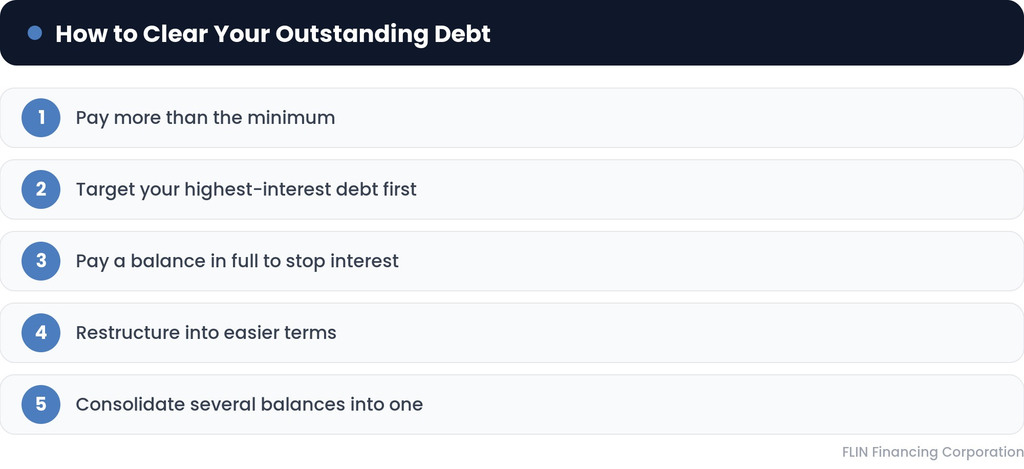
The approach depends on your situation. If you can afford it, pay more than the minimum, and target your highest-interest debt first so you cut the interest that makes the balance grow. If you can pay a balance in full, do that, since it stops interest completely.
If the amount has grown too large to clear easily, or you have several outstanding debts at once, there are other options. You can ask your lender to restructure the debt into easier terms, or combine several balances into one lower monthly payment through consolidation. Both can make a heavy outstanding balance manageable again.
One note: this article is general information, not financial advice. For your specific situation, it helps to speak with a financial professional.
When Your Outstanding Debt Is Too Much to Handle
If your outstanding debts have grown beyond what your salary can cover, especially across several credit cards, online loans, and paylater balances, clearing them one by one can feel impossible. The good news is you do not have to tackle them separately.
FLIN is here to help you with debt consolidation service. You don’t need to hold the burden alone. Tell us your problems & we are ready to help you by creating a solution based on your condition. Our team consists of professionals with tons of experience.
Later, all of your debts can be merged into a new single installment with lower interest & longer tenure. Thus, you are able to manage your cash flow and pay the loan in parallel. Click below to consult with us, it’s free and your story is safe with us.
Check more how to handle your outstanding below:
Your Debt-Free Life Start Here
Consult with us and get the best solution based on your financial condition
SEC Registered
SEC Registration number : 2026040247321-01