Debt Solution
How Do You Stop Credit Card Interest and Penalties From Piling Up in the Philippines?
Watching your credit card balance grow every month, even when you are paying, is one of the most frustrating money problems there is. The interest and penalties keep stacking on top, and the balance barely moves. The good news is there are clear ways to stop the pile-up, and the right one depends on whether you can still pay in full, only pay part, or cannot keep up at all.
This guide shows you how to stop credit card interest and penalties from growing. Simple language, made for regular working people.
💡 Highlights
- Credit card interest in the Philippines can run up to 3 percent per month, so a carried balance grows fast.
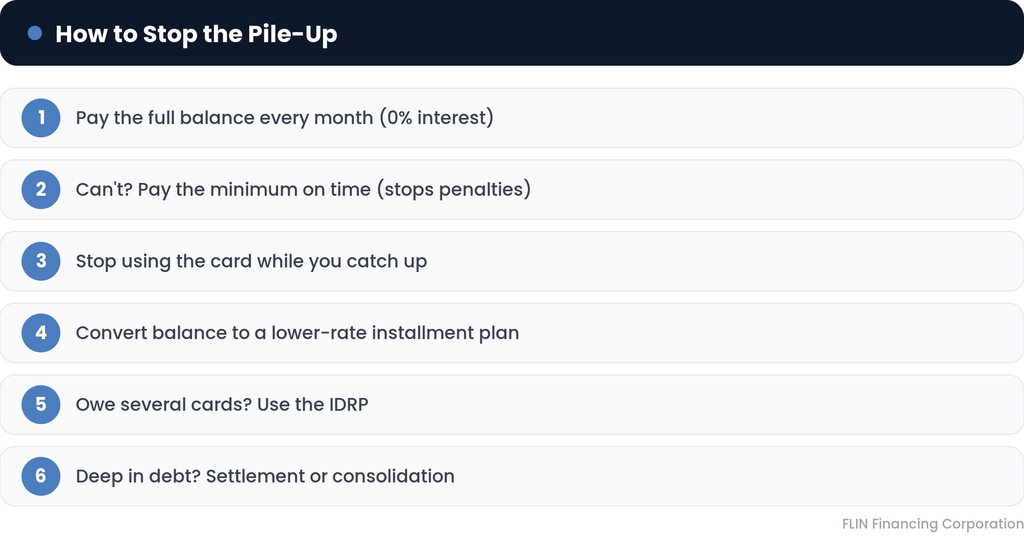
- The surest way to stop interest is to pay your full statement balance by the due date every month.
- If you cannot pay in full, always pay at least the minimum on time to stop penalty and late fees.
- Stop using the card while you catch up, since new purchases keep feeding the balance.
- Converting your balance to a fixed installment plan freezes the high revolving interest into a lower rate.
- If you are already deep in debt, a settlement or consolidation can stop the interest for good.
Why Do Credit Card Interest and Penalties Pile Up So Fast?
It helps to understand the cause first. When you do not pay your full balance, the bank charges interest on what is left. In the Philippines, the BSP allows credit card interest of up to 3 percent per month, which is as high as 36 percent a year. On top of that, missing the due date adds late fees and penalty charges.
Here is the trap most people fall into. Paying only the minimum keeps your account in good standing, but the rest of your balance still gets charged interest, so the total barely drops. Month after month, interest piles on interest, and the balance feels stuck. Stopping that cycle means changing how you pay, not just paying something.
The Surest Way: Pay Your Full Balance Every Month
This is the number one method, and it works completely. Credit cards give you a grace period on purchases, which means if you pay your full statement balance by the due date, you are charged zero interest. The interest only kicks in when you carry a balance past the due date.
So if you can manage it, always pay the full amount shown on your statement, not just the minimum. Do this and your card costs you nothing extra, no matter how much you spent. This is the cleanest way to make sure interest never piles up in the first place. One exception to remember: cash advances usually have no grace period, so interest on them starts right away. Avoid cash advances if you can.
If You Cannot Pay in Full, Pay the Minimum on Time
When paying the full balance is not possible, the next best move is to pay at least the minimum amount due, and always before the due date. This will not stop all the interest, but it does stop the penalty fees and late charges, which are a big part of the pile-up. Paying late is what adds those extra penalties, so never miss the due date even if you can only pay a little. Setting up a reminder or auto-pay for the minimum helps you avoid slipping.
Stop Using the Card While You Catch Up
You cannot bring a balance down if you keep adding to it. While you are trying to stop the interest from growing, pause your spending on that card. Keep it in a drawer, remove it from your online shopping apps, and use cash or a debit card instead. Every new purchase just gives the interest more to feed on, so freezing your spending is a simple but powerful step.
Convert Your Balance to an Installment Plan
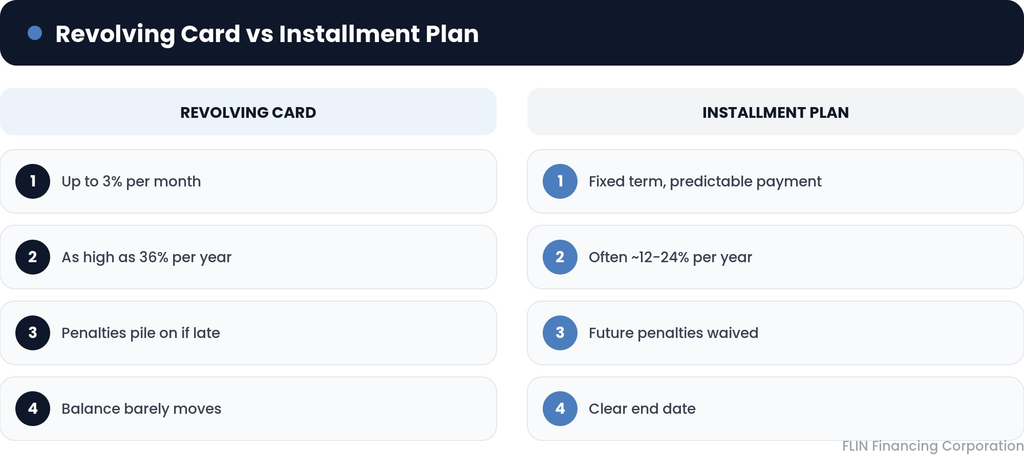
In other words, it takes the runaway revolving interest and locks it into a predictable, lower monthly payment. You will know exactly what you owe each month and when it ends. Call your bank and ask about a balance conversion or installment program.
Ask Your Bank for a Hardship Arrangement
If you are struggling because of a real hardship, like job loss or a medical emergency, talk to your bank directly. Many issuers have programs that can lower your rate, restructure your balance, or waive some penalties when you show genuine intent to pay. Banks would rather get smaller, steady payments than nothing at all, so ask what help they can offer, and get any agreement in writing.
Use the IDRP if You Owe Several Cards
If your problem is several credit cards from different banks, there is a program made for exactly this. As legal guidance describes, the Interbank Debt Relief Program lets you combine your card balances into one plan at a reduced rate, and your penalties freeze once you enroll. It stops the pile-up across all your cards at once and gives you a single, lower payment. The trade-off is that you lose access to those cards while you repay.
Replace the Card With a Lower-Cost Option
Two other ways to stop the high interest are a balance transfer and a consolidation loan. A balance transfer moves your balance to another card offering a low or zero promotional rate for several months, which pauses the interest during that period. A consolidation loan uses a lower-interest personal loan to pay off the card entirely, so the 3 percent monthly card interest stops and you are left with one cheaper payment. Both need you to be in fairly good standing, so they work best before you fall too far behind.
If You Are Already Deep in Debt: Settlement
When the balance has grown beyond what you can repay and you are already far behind, a settlement can stop the interest for good. As legal guidance notes, you can negotiate a one-time discounted payoff, where the bank accepts less than the full amount to close the account. Once the account is settled and closed, no more interest or penalties can accrue on it. Just be sure to get a written “full and final settlement” agreement before you pay.
Quick Recap: Match the Method to Your Situation
If you can pay in full, do that every month and interest never starts. If you can pay part, pay the minimum on time and ask to convert your balance to a lower-rate installment plan. If you owe several cards, look at the IDRP. And if you are already deep in default, a settlement or consolidation can stop the interest entirely.
One note: this article is general information, not legal or financial advice. For a complex situation, free legal help is available from the Public Attorney’s Office if you qualify.
Getting Help to Stop the Pile-Up
Figuring out which of these fits you, and arranging it with your bank, can be overwhelming when the balance is already stressing you out and the calls are starting.
FLIN helps salaried Filipinos combine high-interest debts, credit cards, online loans, and buy-now-pay-later balances, into one manageable monthly payment, and paying funds directly to your creditors so they only settle debts you already have.
In this case, you can do a consultation and share the debts you have. Later, our team will help you to calculate the debt and give a solution that is designed for you. Don’t worry, all of your loans will be set into one installment with lower interest & tenure up to 36 months.
Find more about how to stop the credit card debt via the following articles :
Your Debt-Free Life Start Here
Consult with us and get the best solution based on your financial condition
SEC Registered
SEC Registration number : 2026040247321-01