Debt Consolidation
How Do You Settle 150,000 Pesos in Credit Card Debt in the Philippines?
If you owe around 150,000 pesos in credit card debt and want to settle it, the good news is you have several real options, and you do not have to pay the full ballooning balance in every case. The right path depends on one thing: whether you can still make monthly payments, or you can only raise a one-time amount.
Key Highlights
- Credit card debt is a civil matter, so you cannot be jailed for it, but it keeps growing and hurts your credit if ignored.
- If you can still pay monthly, converting the balance to a fixed installment plan or joining the IDRP is usually best.
- If you can only raise a lump sum, you can often negotiate a discounted payoff of 30 to 70 percent off.
- Lump-sum discounts are largest when the account is already long overdue, usually 12 months or more.
- Since you owe around 150,000 pesos, you likely qualify for the Interbank Debt Relief Program.
- Always get a “full and final settlement” letter in writing before you pay a single peso.
- A settled account stays on your credit record for about 5 years, and a forgiven amount may have tax effects.
What Are Your Options to Settle 150,000 Pesos?
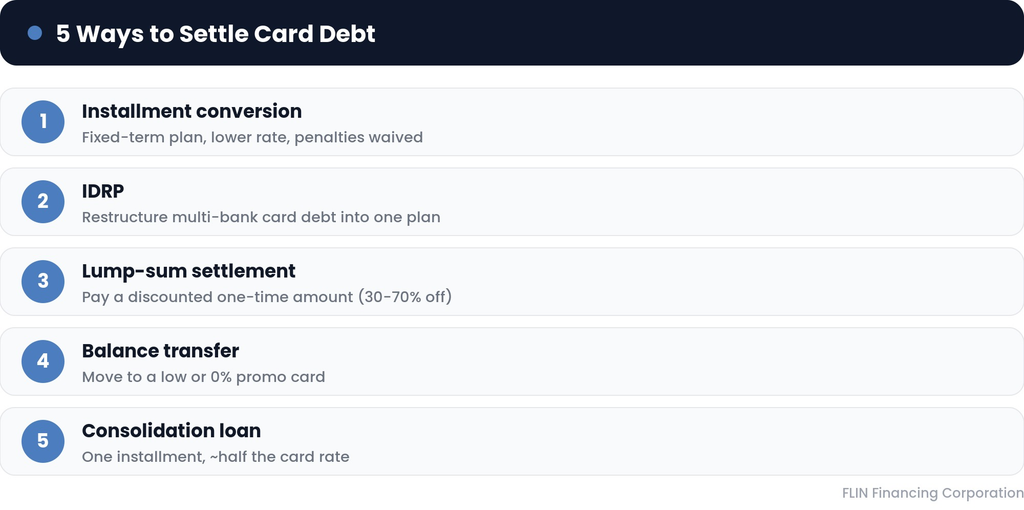
There are a few main ways to settle card debt. Here is what each one does.
Installment conversion or hardship restructuring
As Philippine legal guidance describes, your bank can convert your balance into a fixed-term installment loan, often 12 to 60 months, at a lower rate and with future penalties waived. This keeps your account current. It is best if you still have income and can pay monthly.
Lump-sum settlement at a discount
If you can raise a one-time amount, you can negotiate to pay less than the full balance to close the account. As legal guidance notes, discounts commonly range from 30 to 70 percent off, and they are largest when the account is already long overdue, usually 12 months or more, because by then the bank has written it down and prefers some cash over none.
Balance transfer
You move the balance to another card offering a low or zero promotional rate for several months. This needs good standing with the new bank, and it only shifts the debt rather than reducing it, but it can buy time to pay down the principal.
A consolidation loan
A personal loan pays off the card, leaving you one installment, often at about half the card’s interest rate. This needs enough income to qualify. For this, you can ask help from FLIN and do a free consultation. Click below for free consultation.
Which Option Fits Your Situation?
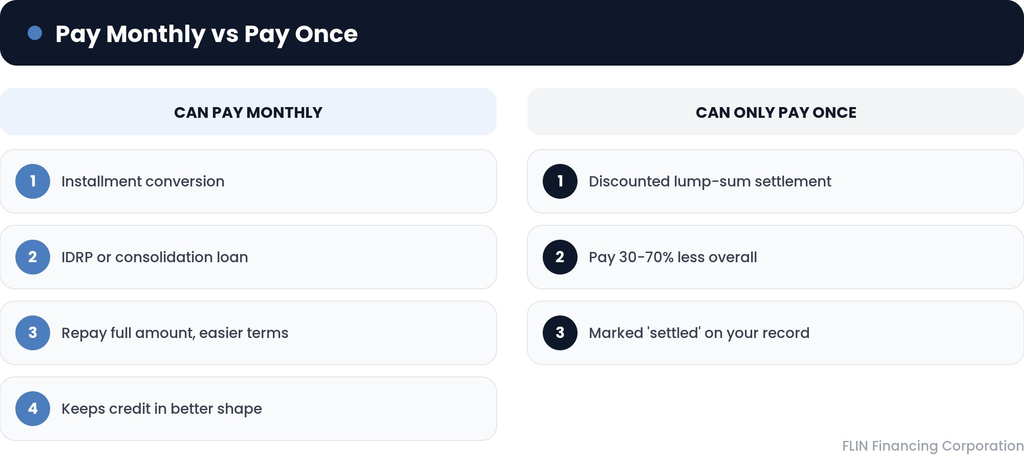
The choice comes down to your cash flow.
If you still have a steady income and can afford monthly payments, go for installment conversion, the IDRP, or a consolidation loan. These keep your credit in better shape because you repay the full amount on easier terms.
If your income has dropped and you can only raise a one-time lump sum, aim for a discounted lump-sum settlement. You pay less overall, but it marks your credit record as settled for less than the full amount.
So ask yourself honestly: can I pay this over time, or can I only pay a reduced amount once? Your answer points you to the right path.
How Do You Negotiate a Lump-Sum Settlement?
If you go the lump-sum route, here is how to do it well. First, figure out the maximum amount you can actually produce within 7 to 30 days. Then contact the bank’s Debt Recovery or Settlement department and make a clear offer. As legal guidance advises, having real cash ready gives you the strongest bargaining power.
A simple way to word your offer is like this:
“I am willing to settle this account through a one-time payment of [amount] on or before [date], provided this is accepted as full and final settlement, with a waiver of the remaining balance, penalties, and further charges.”
Start lower than your maximum so you have room to negotiate up. Keep everything polite and in writing.
What Must You Get in Writing Before You Pay?
This is the most important rule, so do not skip it. Before you hand over any settlement money, get a written agreement from the bank that clearly states the agreed amount will be treated as full and final settlement of the account. As legal guidance stresses, this document protects you from the bank later chasing the remaining balance. Pay only after you have it, keep the receipt, and keep a copy of the agreement permanently.
What Happens to Your Credit After You Settle?
Be ready for this part. If you settle for less than the full amount, your credit report will usually show the account as “settled” rather than “paid in full,” and that record stays for about 5 years. It is still far better than leaving the debt unpaid, but it does affect future borrowing for a while.
There is also a tax point to know. In some cases, the amount a bank forgives can have income tax consequences, so for a large waiver it is worth asking a tax professional.
One note: this article is general information, not legal or financial advice. For a complex case, free legal help is available from the Public Attorney’s Office if you qualify.
Getting Help to Settle the Right Way
Negotiating with a bank, choosing between restructuring and a discounted payoff, and making sure the paperwork protects you is a lot to handle alone, especially when collectors are already calling.
FLIN helps eligible salaried Filipinos review their existing debts and explore whether debt consolidation may be suitable for their financial situation. Depending on eligibility and the debts involved, consolidation may help organize eligible obligations into a more structured repayment arrangement with FLIN’s Debt Consolidation Program
Start with a free consultation to understand your options before deciding on your next step.
Find other ways to solve the debts by following these articles below :
Your Debt-Free Life Start Here
Consult with us and get the best solution based on your financial condition
SEC Registered
SEC Registration number : 2026040247321-01