Debt Consolidation
Debt Collection in the Philippines: What It Is and Your Rights

If you have fallen behind on a loan, you will likely deal with debt collection at some point. It is simply the process of a lender, or an agency acting for them, trying to recover money you owe. It is a normal part of borrowing, but it comes with strict rules, and knowing those rules protects you from the abusive tactics that some collectors use.
This guide explains what debt collection is, how it works in the Philippines, and the rights that keep it fair. Simple language, made for regular working people.
💡 Highlights
- Debt collection is the process of recovering an unpaid debt, done by the lender or a hired agency.
- A debt collection agency is a third party a lender uses to follow up on overdue accounts.
- Collection in the Philippines is bound by strict fair collection rules.
- Collectors cannot threaten you, shame you, or contact your family and officemates to pressure you.
- The Philippines has no single “Fair Debt Collection Practices Act,” but it has equivalent protections under SEC, BSP, and privacy rules.
- Owing money is a civil matter, so you cannot be jailed for an unpaid debt.
- Unfair or abusive collection can be reported to the SEC, BSP, or the National Privacy Commission.Poin pertama di sini
What Is Debt Collection?
Debt collection is the process of pursuing payment on a debt that a borrower has not paid. When you miss payments, the lender begins efforts to recover the money, starting with reminders and demand letters, and escalating from there if the debt stays unpaid.
Collection can be done in two ways. The lender’s own in-house team may handle it, or the lender may pass the account to a separate debt collection agency. Either way, the goal is to get you to pay, and either way, the collector has to follow the same rules.
What Is a Debt Collection Agency?
A debt collection agency is a third-party company that a lender hires to recover overdue debts on its behalf. When an account stays unpaid for a while, often around six months, a bank or lender may hand it over to one of these agencies, which then takes over the follow-up.
It is important to know that handing your account to an agency does not give the agency more power than the original lender. A collection agency cannot do anything the lender itself could not legally do. It cannot arrest you, seize your things without a court process, or harass you. It is bound by the exact same fair collection rules.
How Does Debt Collection Work in the Philippines?
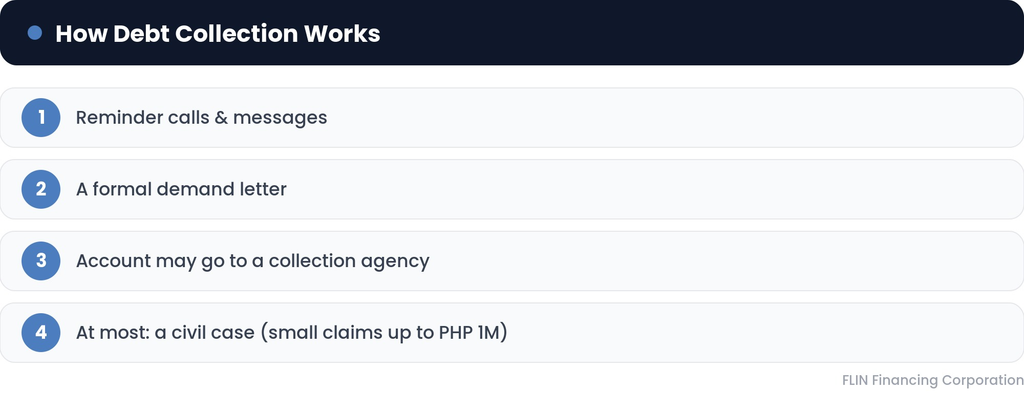
The usual path is predictable. First come reminder calls and messages. Next, the lender sends a formal demand letter stating what you owe. If the debt remains unpaid, the account may be passed to a collection agency for more follow-up. And if you still do not pay, the lender’s only lawful escalation is to file a civil case in court to recover the money, usually through the small claims process for amounts up to one million pesos.
Notice what is not on that list. There is no jail, no arrest, and no seizing of your property by a phone call. Collection is about communication and, at most, a civil court process.
Is There a Fair Debt Collection Practices Act in the Philippines?
This is a common question, and the honest answer is no, not by that name. The “Fair Debt Collection Practices Act” is a law in the United States. The Philippines does not have one single law with that title.
But do not mistake that for having no protection. The Philippines protects borrowers through several rules working together. SEC Memorandum Circular No. 18, Series of 2019 prohibits unfair debt collection by lending and financing companies. The Financial Products and Services Consumer Protection Act (RA 11765) requires fair treatment and penalizes abusive collection. BSP rules govern collection by banks. And the Data Privacy Act protects your personal information from misuse. Together, these give you protections similar to what a dedicated fair collection law would.
What Are Unfair Debt Collection Practices?
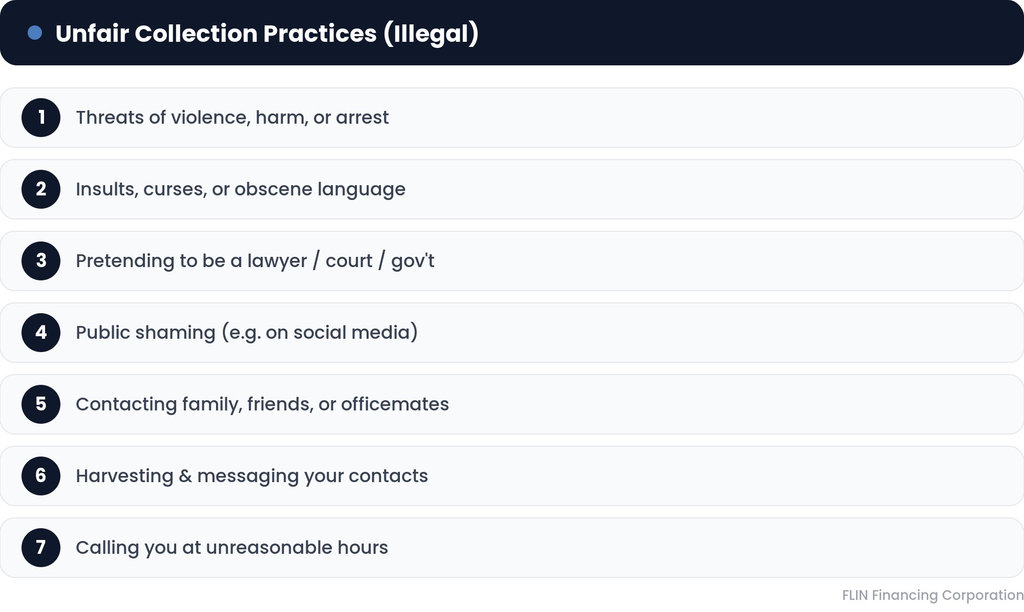
Knowing what is banned helps you recognize when a collector crosses the line. Under the rules above, a collector cannot:
- Threaten you with violence, harm, or arrest.
- Use insults, curses, or obscene language.
- Pretend to be a lawyer, court officer, or government agent.
- Publicly shame you, such as posting about your debt on social media.
- Contact your family, friends, or officemates to embarrass or pressure you, when they are not a co-maker or guarantor.
- Harvest your phone contacts and message them, which is a privacy violation common among online lending apps.
- Call you at unreasonable hours.
Any of these is an unfair collection practice, and it is against the law, no matter how far behind you are.
What Are Your Rights During Debt Collection?
You keep real rights throughout the process. You have the right to be treated fairly and with respect. You have the right to privacy, so your debt cannot be broadcast to people around you. You have the right to clear information about what you owe. And most importantly, you have the right not to be jailed for an unpaid debt, since under the Constitution, debt is a civil matter, not a crime.
These rights mean you can deal with collection calmly. A collector who threatens you with jail or harasses your contacts is not exercising some special power. They are breaking the law.
Where Do You Report Unfair Debt Collection?
If a collector crosses the line, you can report them, and these complaints have real consequences. Report abusive collection by a lending or financing company to the SEC. Report the misuse of your personal data, like contact harvesting, to the National Privacy Commission. If the collector is a bank or bank-linked, raise it with the bank first, then the BSP. And for threats or cyber-shaming, go to the PNP Anti-Cybercrime Group or NBI Cybercrime Division.
Before reporting, save your evidence: screenshots, call logs, the numbers used, and the name of the collector and company. Good evidence makes your complaint much stronger.
One note: this article is general information, not legal advice. For a serious case, free legal help is available from the Public Attorney’s Office if you qualify.
Handling the Debt Behind the Collection
Knowing your rights stops the abuse, but it does not clear the debt itself. The two are separate. You handle unfair collection through the offices above, and you handle the actual debt through a realistic repayment plan. And for many people, collection started because several debts grew past what their salary could cover.
If that is your situation, FLIN PH can help. FLIN helps salaried Filipinos combine high-interest debts, credit cards, online loans, and buy-now-pay-later balances, into one more manageable monthly payment. A short, no-pressure consultation with FLIN PH is enough to see what fits your situation. Debt collection is stressful, but you have rights that keep it fair, and a clear way to get the debt itself under control.
Find out more about debt collection via articles below :
Your Debt-Free Life Start Here
Consult with us and get the best solution based on your financial condition
SEC Registered
SEC Registration number : 2026040247321-01