Uncategorized
101 Guide about Credit Card & How to Use It Without Getting Trapped
A credit card can feel like magic: you buy something now and pay for it later. Used well, it is a handy tool that even helps you build a good record with banks. Used carelessly, it is one of the fastest ways to sink into debt that just keeps growing. This guide explains what a credit card really is, how it works, how it differs from a debit card, how to read your statement, and how to stay on the safe side of it.
Key Highlights
- A credit card lets you spend the bank’s money now and pay it back later, up to a set limit.
- A debit card uses your own money from your bank account. A credit card uses borrowed money you have to pay back.
- If you pay your full bill every month, a credit card costs you nothing extra and can help build your credit record.
- If you only pay the minimum, the leftover balance grows fast because of interest.
- In the Philippines, banks can charge up to 3 percent interest per month on unpaid balances, which adds up quickly.
- Cash advances are the most expensive way to use a card, so avoid them if you can.
- The trick is simple: treat your card like your own money, and pay it in full every month.
What Is a Credit Card?
A credit card is a card from a bank that lets you borrow money to pay for things, up to a certain limit, on the promise that you will pay it back later. That limit is called your credit limit, and it is the most you are allowed to borrow at one time.
Here is the simple idea. When you swipe or tap a credit card, you are not spending your own money, you are using the bank’s money. The bank pays the store for you, and then you pay the bank back. If you repay the full amount on time, no problem, it costs you nothing extra.
How Does a Credit Card Actually Work?
Every month, the bank adds up everything you charged to your card. That total becomes your bill, also called your statement, and it comes with a due date, the deadline to pay. When the bill arrives, you have two choices. You can pay the full amount, which means you owe nothing more and pay zero interest. Or you can pay just part of it, and the bank charges interest on whatever is left.
What Is the Difference Between a Credit Card and a Debit Card?
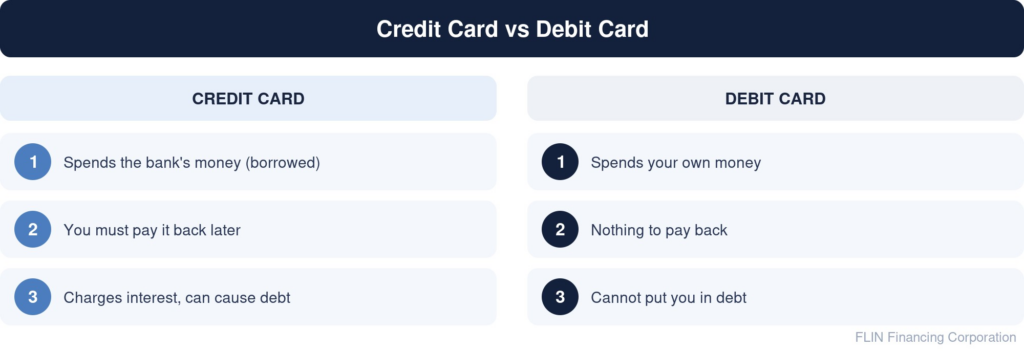
A debit card is connected to your own bank account. When you use it, you are spending your own money, the cash you already have in the bank. If your account is empty, the card will not work. There is nothing to pay back, because it was your money all along.
A credit card is connected to the bank’s money, not yours. When you use it, you are borrowing, and you have to pay it back later. If you do not pay it all back, you get charged interest.
How Do You Read Your Credit Card Statement?
The statement date is the day the bank closed your bill for the month and added everything up. The due date is your deadline to pay, and paying even one day late can mean penalties. The total amount due is everything you owe for the month; pay this in full and you are golden, with no interest at all.
The minimum amount due is the smallest payment the bank will accept to keep you in good standing. This is the number that traps people, because paying only this leaves most of your balance sitting there, quietly growing with interest.
You will also see your credit limit, which is your maximum, and your available credit, which is how much you have left to spend. And of course, a list of all your transactions for the month, which you should always check to make sure every charge is really yours.
How Does Credit Card Interest Work in the Philippines?
This is the part that decides whether your card is a friend or a problem. As cited from a 2025 guide by RCBC based on BSP rules, banks in the Philippines can charge up to 3 percent interest per month on your unpaid balance. That might sound small, but over a year it adds up to a lot, and it piles on top of your balance every single month you do not pay in full.
To see why caps even exist, look at the past. As cited from a Philippine market report, before the government stepped in, credit card interest averaged around 42 percent a year, which is brutal. The cap brought that down, but 3 percent a month is still expensive, so it is nothing to take lightly.
One more warning. A cash advance, meaning using your credit card to withdraw actual cash, is the most expensive way to use it. As cited from the same RCBC guide, interest on a cash advance starts the moment you take the money, with no grace period, plus an extra fee on top. If you can avoid cash advances, do.
What Are the Most Common Credit Card Problems in the Philippines?
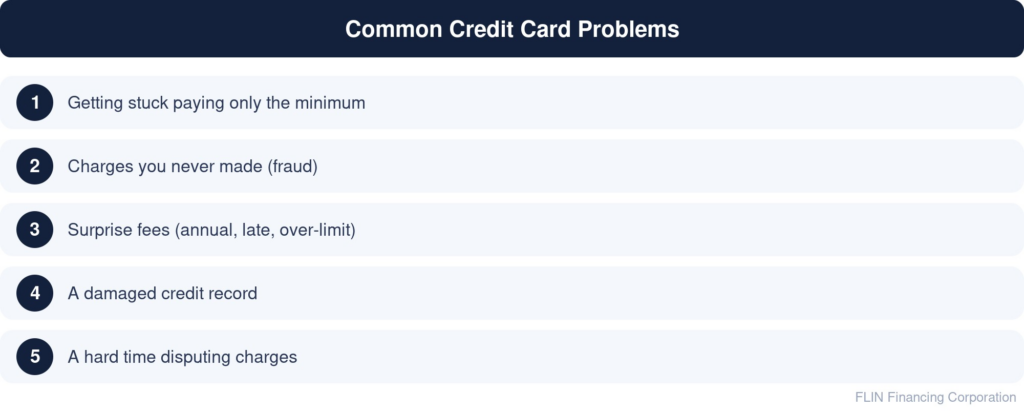
Before you rely on a card, it helps to know the problems real people run into, so you can dodge them. Here are the ones that come up most often.
Getting stuck paying only the minimum
This is the number one problem. People pay just the smallest amount each month, the balance stays, the interest piles on, and the debt quietly grows until it feels impossible to clear. More on this in the next section, because it traps so many.
Charges you never made
Credit card fraud is a big and growing headache in the Philippines. As cited from a 2025 legal report based on BSP data, unauthorized charges, card skimming, and phishing are the most common types, and online “card-not-present” fraud alone makes up over 70 percent of cases. The good news: as cited from BSP rules under the Access Devices Regulation Act, you are generally not liable for unauthorized charges if you report them to your bank promptly, usually within 30 to 60 days. So check your statement every month, and report anything you do not recognize right away.
Surprise fees that eat your money
Many people get blindsided by charges they did not expect, like the yearly annual fee, late payment penalties, over-limit fees, and the extra cost of cash advances. Always read what your card charges, and set a reminder before your due date so you never pay a late fee for nothing.
A damaged credit record
When you fall behind, your bank reports it, and that record follows you. As covered by Philippine credit reporting rules, missed payments can quietly hurt your chances of getting a car loan, housing loan, or even a new card later, sometimes for years. One late payment is not the end of the world, but a pattern of them can cost you.
A hard time disputing charges
When people try to question a wrong or fraudulent charge, they often get told to “pay first and complain later,” which feels unfair. But you do have rights. As cited from BSP consumer protection rules, banks are required to have a consumer assistance unit and to handle fraud disputes with priority. If your bank drags its feet, you can escalate the complaint to the BSP. Pay the parts of your bill you do agree with, put your dispute in writing, and keep every reference number.
Why Do So Many People Get Trapped by Credit Cards?
You spend it on the card. The bill comes. You are a bit short, so you pay just the minimum amount due, and you feel fine because your account is still in good standing. But the rest of your balance stays, and the bank charges interest on it.
Next month, you spend a little more, pay the minimum again, and the balance creeps up. Do this for a year and you can end up owing far more than you ever actually bought, with most of your payments just feeding the interest.
How Do You Use a Credit Card the Smart Way?
Pay your bill in full every month whenever you can. This is the golden rule. Do this and you never pay a single peso of interest, and the card becomes a pure convenience. Treat your credit card like your own money, not like extra money; if you cannot afford it with cash, you probably cannot afford it on the card either. Try not to use more than about a third of your limit, since maxing out your card can hurt how banks see you. Always pay on time to dodge penalties, and always check your statement for charges you do not recognize. And stay away from cash advances unless it is a true emergency.
Follow these and a credit card works for you, helping you handle daily life and quietly building a good record that makes future loans easier to get.
Credit card is a good tool but may bring bad benefits if you don’t use it carefully , and if yours has grown into a balance you cannot seem to shake, do not just keep paying the minimum and hoping. That is the treadmill that never ends. And do not reach for a loan app to cover it, since that only trades one expensive debt for another.
If things are out of your control, let the best help you, FLIN. FLIN is able to manage your credit card loans, by merging it into a single new installment. This way becomes a new door for you in gaining new life without a debt. The process is really easy, you just fill the consultation form and do consultation with us. We will give you the best solution based on your condition. Click below to start free consultation.
Find more about how to manage your credit card below:
Your Debt-Free Life Start Here
Consult with us and get the best solution based on your financial condition
SEC Registered
SEC Registration number : 2026040247321-01