Debt Solution
Loans for Bad Credit in the Philippines: Options, Risks & What to Know Before You Borrow
Bad credit can feel like a locked door, but it rarely is. Here is what “bad credit” really means in the Philippines, which loan options stay open to you, and how to avoid making things worse before you borrow.
Key Highlights
- “Bad credit” is not an official label in the Philippines. There is no government blacklist, only a credit history that lenders read as high risk.
- You can still get a loan with bad credit, but your options are fewer, the interest is higher, and the risk of falling deeper into debt is real.
- Many online loan apps that approve bad credit borrowers instantly are unregistered and charge illegal rates, so verifying SEC registration is a must.
- Secured credit cards can be a safer tool to rebuild your score, starting with a deposit as low as ₱2,000.
- If your bad credit comes from debts piling up across several lenders, borrowing more usually makes it worse. Fixing the root problem is the smarter move.
What Does “Bad Credit” Actually Mean in the Philippines?
A lot of Filipinos worry that they are “blacklisted,” but that status does not officially exist. As cited from the Credit Information Corporation (CIC), the government’s central credit registry, your borrowing history is collected and shared with lenders through accredited bureaus like CIBI Information Inc., TransUnion Philippines, and CRIF Philippines.
When people say “bad credit,” what they really mean is a credit report with negative marks. Missed payments, defaults, loans sent to collection, or maxed-out cards all tell a lender that you might struggle to repay. There is no single number that makes you “bad.” Each lender reads your history and decides for itself.
If you are not sure where your record stands, it helps to check it first before applying anywhere. You can follow our step-by-step guide on how to check your credit score so you know exactly what lenders see.
Can You Really Get a Loan With Bad Credit?
Yes, you can. But it is important to be honest about what that means. Lenders who approve bad credit borrowers are taking on more risk, and they price that risk into your loan. That usually shows up as higher interest, shorter terms, smaller loan amounts, and more fees.
Personal loans with bad credit from banks are the hardest to get, because banks screen applicants closely. The options that stay open to you tend to be smaller and more expensive, which is exactly why you need to choose carefully instead of grabbing the first “instant approval” offer you see.
What Are Your Loan Options If You Have Bad Credit?
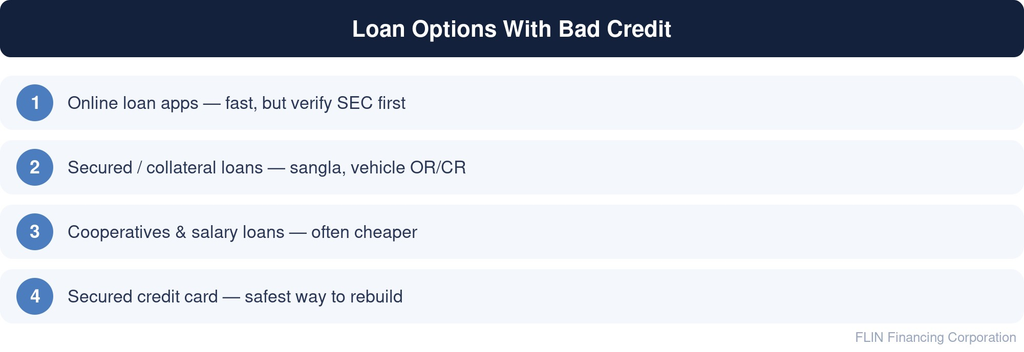
Here are the main paths people take, along with what to watch out for.
Online loan apps
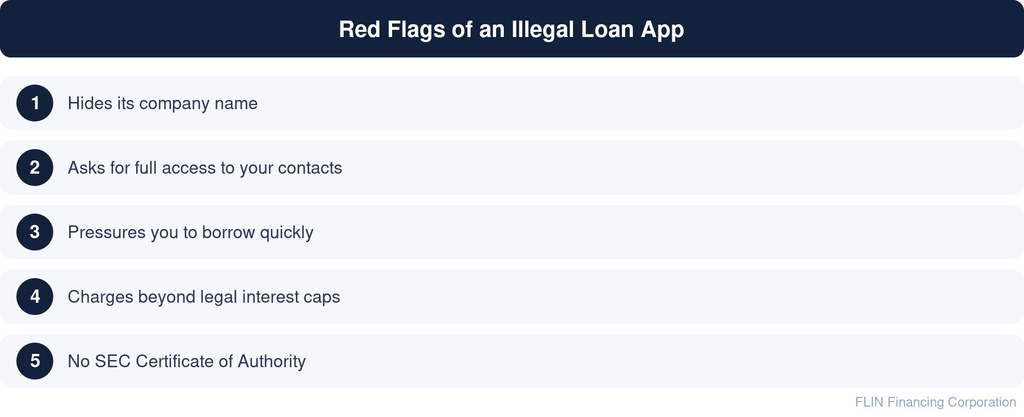
These are the most common because they promise fast, no-collateral approval straight from your phone. The problem is that many of them are risky. Some are not registered with the SEC at all, and they charge interest and penalties far beyond what the law allows. Before you download any app, treat it as a red flag if it hides its company name, asks for full access to your contacts, or pressures you to borrow quickly.
Secured or collateral-based loans
Options like a pawnshop loan (sangla) or a loan against a vehicle (OR/CR) can be easier to get with bad credit, because the lender holds an asset as security. Rates are still high, so borrow only what you can realistically repay.
Cooperatives and salary loans
If you belong to a cooperative, or your employer offers salary loans, these are often cheaper and more forgiving than online lenders. They also tend to look at your current standing rather than only your credit history.
What About Credit Cards for Bad Credit?
A regular credit card is tough to qualify for with a damaged record. This is where a secured credit card comes in. As cited from Philippine consumer finance guides, several banks offer secured cards backed by a cash deposit, sometimes starting at around ₱2,000, and your credit limit is based on that deposit.
Used well, a secured card is one of the safest ways to rebuild credit. You spend a small amount, pay it in full and on time every month, and over time your payment history improves. The goal is not to add new debt. It is to show a clean, steady track record that future lenders can trust.
Why Are Bad Credit Loans So Risky?
The biggest danger is the debt spiral. High interest plus a short repayment term can push you to borrow again just to cover the last loan, and that cycle is very hard to escape.
There is some legal protection. As cited from the Securities and Exchange Commission (SEC), lending and financing companies face caps on the interest and fees they can charge on small, short-term consumer loans, and in late 2025 the SEC moved to tighten those limits further. On top of that, Republic Act No. 11765, the Financial Products and Services Consumer Protection Act, protects borrowers from abusive collection and unfair practices.
The catch is that illegal lenders ignore all of this. To protect yourself, verify that a lender holds an SEC Certificate of Authority to operate as a lending or financing company before you borrow. You can check the SEC’s official lists and advisories, which name both registered companies and the online lending platforms flagged as illegal.
How Do You Check and Improve Your Credit Score?
Rebuilding starts with knowing your baseline. Check your credit report first, then work on the habits that lift your score over time.
A few basics go a long way. Pay every bill on or before the due date, keep your credit card balances low relative to your limit, avoid applying for several loans at once, and review your report for errors that may be dragging you down. Progress is slow but steady, and it costs you nothing but discipline. For the exact steps on pulling your report, our credit score guide walks you through it.
Is Taking Another Loan Really the Best Move for Bad Credit?
This is the question most “loans for bad credit” articles skip. If your credit went bad because of one rough patch, a small, well-chosen loan might help you recover. But if it went bad because debts have stacked up across several apps, cards, and lenders, another high-interest loan rarely fixes anything. It just adds one more payment to an already stretched budget.
In that situation, the real problem is not access to a new loan. It is the structure of the debt you already carry.
When several debts are pulling you under at once, a more sustainable path is to reorganize what you owe instead of adding to it. FLIN works with you to consolidate multiple high-interest debts into one structured, more affordable plan, with funds coursed directly to your existing creditors. If that sounds closer to what you actually need, you can book a free consultation and talk through your options with no pressure.
The bottom line: bad credit narrows your choices, but it does not trap you. Understand your record, avoid predatory lenders, rebuild with tools like a secured card, and be honest about whether more borrowing is a solution or just a heavier load. Click below for free consultation!
Read more about how to arrange your debt via articles below:
Your Debt-Free Life Start Here
Consult with us and get the best solution based on your financial condition
SEC Registered
SEC Registration number : 2026040247321-01